










The construction industry continues to demand concrete solutions that offer superior performance, durability, and workability. Among the most significant advances in concrete technology has been the development of high-range water reducing admixtures, which rely heavily on specialized polymer components to achieve their exceptional properties. TPEG, or polyoxyethylene ether, has emerged as a cornerstone ingredient in formulating these advanced chemical admixtures, enabling concrete producers to create mixtures with enhanced flowability while maintaining structural integrity and reduced water content.
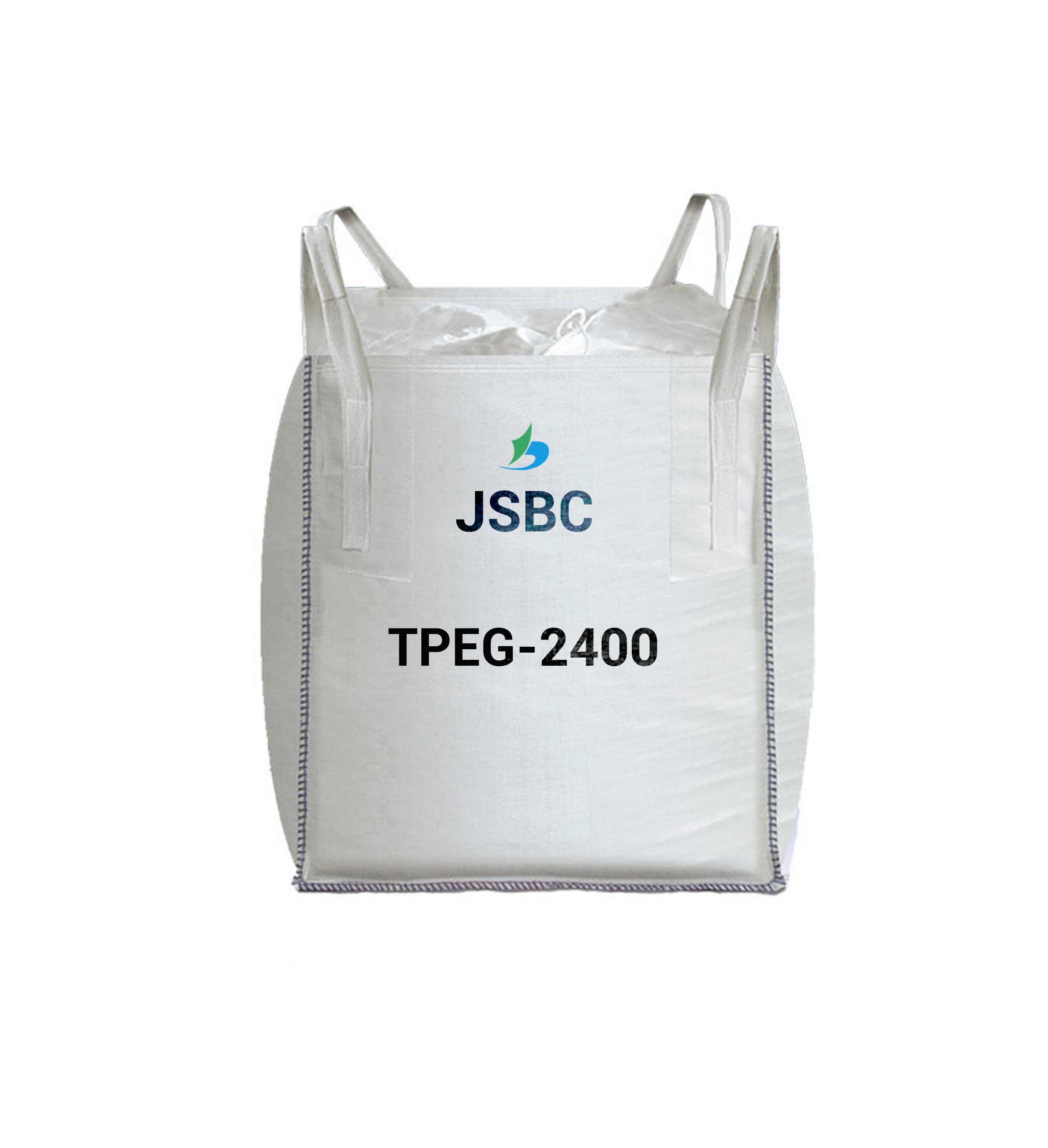
Modern concrete applications require admixtures that can significantly reduce water-to-cement ratios while maintaining optimal workability characteristics. The molecular structure of TPEG provides unique properties that make it exceptionally suitable for this purpose. Its polyether backbone combined with specific molecular weight distributions allows for precise control over concrete flow properties, setting times, and long-term mechanical performance. This sophisticated chemistry enables concrete producers to achieve water reduction levels that were previously unattainable with conventional admixture technologies.
The fundamental chemistry of TPEG revolves around its polyoxyethylene ether structure, which consists of repeating ethylene oxide units that create a flexible polymer chain. This molecular architecture provides the compound with exceptional water solubility and the ability to interact effectively with cement particles at the microscopic level. The specific arrangement of oxygen atoms within the polymer backbone creates multiple sites for hydrogen bonding with water molecules, resulting in enhanced dispersion capabilities that are essential for high-range water reducing applications.
Manufacturing processes for TPEG typically involve controlled polymerization reactions that determine the final molecular weight and distribution characteristics of the product. These parameters directly influence the performance attributes of the resulting water reducing admixtures, including their dispersing efficiency, compatibility with various cement types, and stability under different environmental conditions. The precise control over molecular weight allows formulators to tailor TPEG properties to specific application requirements.
When TPEG is incorporated into concrete mixtures, it demonstrates remarkable affinity for cement particle surfaces through multiple interaction mechanisms. The polymer chains adsorb onto cement grains, creating a protective layer that prevents particle agglomeration and promotes uniform distribution throughout the mixture. This adsorption process is facilitated by the polar nature of the polyoxyethylene segments, which form strong interactions with the ionic species present on cement particle surfaces.
The steric stabilization mechanism provided by TPEG represents a significant advancement over traditional admixture technologies. As cement particles attempt to come into close contact, the adsorbed polymer chains create a repulsive force that maintains particle separation and prevents premature hydration reactions. This mechanism ensures that concrete mixtures remain workable for extended periods while developing the desired strength characteristics during the curing process.
Creating effective high-range water reducing admixtures requires careful consideration of TPEG concentration levels, molecular weight specifications, and compatibility with other admixture components. Typical formulations incorporate TPEG at concentrations ranging from 20% to 60% by weight, depending on the desired performance characteristics and target application requirements. The selection of appropriate molecular weight grades ensures optimal balance between dispersing efficiency and mixture stability over time.
Formulators must also account for the synergistic effects that occur when TPEG is combined with other functional additives such as set retarders, air entraining agents, and viscosity modifiers. These interactions can significantly influence the overall performance profile of the finished admixture, requiring extensive testing and optimization to achieve the desired concrete properties. Understanding these complex relationships enables manufacturers to develop superior products that meet increasingly demanding construction specifications.
Maintaining consistent quality in TPEG-based admixture production requires implementation of rigorous quality control protocols throughout the manufacturing process. Critical parameters such as molecular weight distribution, hydroxyl value, and moisture content must be carefully monitored to ensure batch-to-batch consistency and reliable performance in concrete applications. Advanced analytical techniques including gel permeation chromatography and nuclear magnetic resonance spectroscopy provide detailed characterization of TPEG properties.
Storage and handling considerations play equally important roles in preserving TPEG quality during transportation and warehousing operations. The hygroscopic nature of polyoxyethylene ethers necessitates proper moisture protection to prevent degradation and maintain optimal performance characteristics. Manufacturers typically implement controlled atmosphere storage systems and establish strict handling procedures to minimize exposure to environmental contaminants that could compromise product integrity.
The primary benefit of incorporating TPEG into water reducing admixtures lies in its exceptional ability to reduce water content while maintaining or improving concrete workability. Typical water reduction levels achievable with TPEG-based admixtures range from 15% to 30%, significantly higher than conventional admixture technologies. This substantial water reduction translates directly into improved concrete strength, reduced permeability, and enhanced long-term durability characteristics.
Workability enhancement provided by TPEG extends beyond simple water reduction effects, encompassing improvements in concrete flow characteristics, placement efficiency, and finishing properties. The polymer's ability to maintain particle dispersion over extended periods ensures that concrete mixtures retain their flowability during transportation and placement operations. This extended working time provides contractors with greater flexibility in scheduling and executing complex concrete placements without compromising final concrete quality.
Concrete mixtures formulated with TPEG-based water reducing admixtures demonstrate superior strength development characteristics compared to conventional concrete formulations. The reduced water-to-cement ratios achievable with these admixtures result in denser concrete matrices with fewer capillary pores and enhanced mechanical properties. Early-age strength development is typically accelerated, while ultimate compressive strengths can exceed those of comparable mixtures without high-range water reducers by 20% to 40%.
Long-term durability benefits associated with TPEG usage include improved resistance to chloride penetration, reduced carbonation rates, and enhanced freeze-thaw durability. The denser concrete microstructure achieved through water reduction creates more effective barriers against environmental attack mechanisms, extending service life and reducing maintenance requirements for concrete structures. These performance advantages make TPEG-based admixtures particularly valuable for critical infrastructure applications where long-term performance is paramount.
Ready-mix concrete producers represent one of the largest consumer segments for TPEG-based water reducing admixtures, utilizing these products to enhance the performance and profitability of their operations. The ability to produce high-performance concrete with reduced cement content while maintaining specified strength requirements provides significant economic advantages in competitive markets. Additionally, the extended working time provided by TPEG enables ready-mix producers to serve wider geographic areas without compromising concrete quality.
Transportation and placement advantages offered by TPEG-based admixtures include reduced segregation tendencies, improved pumpability, and enhanced finishability characteristics. These properties are particularly valuable for architectural concrete applications where surface appearance and uniformity are critical quality factors. The consistent performance provided by high-quality TPEG products enables ready-mix producers to maintain tight quality control standards while meeting diverse customer requirements.
Precast concrete manufacturers benefit significantly from the precise control over concrete properties that TPEG-based admixtures provide, enabling production of components with superior dimensional accuracy and surface finish quality. The rapid strength development characteristics achievable with these admixtures allow for faster production cycles and improved manufacturing efficiency. This acceleration in strength gain is particularly valuable in prestressed concrete applications where early tensioning operations are required.
The consistency and reliability of TPEG-based formulations enable precast manufacturers to optimize their production processes and reduce quality variations between production runs. Automated batching systems can more precisely control admixture dosages, resulting in uniform concrete properties and reduced waste generation. These operational improvements translate directly into enhanced profitability and competitive positioning within the precast concrete market.
Determining optimal TPEG dosage levels requires comprehensive testing programs that evaluate concrete performance under specific project conditions and requirements. Standard testing protocols should encompass workability measurements, strength development monitoring, and durability assessments to ensure that the selected dosage provides the desired balance of properties. Factors such as cement type, aggregate characteristics, and environmental conditions significantly influence optimal dosage requirements.
Performance testing programs should include evaluation of setting time effects, air content stability, and compatibility with other admixtures commonly used in concrete production. The temperature sensitivity of TPEG-based admixtures necessitates testing across the range of environmental conditions expected during concrete placement and curing. This comprehensive approach to dosage optimization ensures reliable performance and minimizes the risk of unexpected concrete behavior during construction operations.
Understanding the compatibility relationships between TPEG and other concrete ingredients represents a critical aspect of successful admixture formulation and application. Potential interaction effects with supplementary cementitious materials, chemical admixtures, and aggregate surface treatments must be carefully evaluated to prevent adverse performance impacts. Some combinations may result in unexpected setting behavior, reduced workability, or compromised long-term concrete properties.
Systematic compatibility testing protocols should be established to identify potential interaction issues before full-scale concrete production begins. These evaluations should encompass both immediate effects on fresh concrete properties and long-term impacts on hardened concrete performance. Documentation of compatibility relationships enables concrete producers to develop reliable mixture designs and avoid costly field problems associated with admixture interactions.
TPEG products used in high-range water reducing admixtures typically have molecular weights ranging from 2000 to 4000 daltons, with 2400 daltons being a commonly used specification. This molecular weight range provides an optimal balance between water reduction efficiency and concrete workability retention. Lower molecular weights may provide insufficient water reduction, while higher molecular weights can lead to excessive retardation effects.
TPEG offers several advantages over traditional polycarboxylate ether components, including superior compatibility with various cement types, enhanced stability in high-temperature environments, and more predictable performance characteristics. The polyoxyethylene ether structure provides better dispersion efficiency and longer workability retention compared to many alternative polymer systems. However, the optimal choice depends on specific application requirements and performance objectives.
TPEG-based water reducing admixtures should be stored in temperature-controlled environments between 5°C and 30°C to maintain optimal performance characteristics. Protection from direct sunlight and moisture exposure is essential to prevent degradation of the polymer structure. Storage containers should be sealed to minimize contamination and oxidation effects that could compromise admixture effectiveness over extended storage periods.
Yes, TPEG can typically be used in combination with various other admixture types including air entraining agents, set retarders, and viscosity modifying agents. However, compatibility testing is essential to ensure that no adverse interactions occur that could compromise concrete performance. Some combinations may require dosage adjustments or specific addition sequences to achieve optimal results in the final concrete mixture.
 Hot News
2026-09-07
2026-09-14
2026-09-07
2026-09-01
2026-08-17
2026-07-29



 EN
EN